Wednesday, March 16, 2011

TRASH


Just north of the city, a river cuts between two mountains.  A dirt path follows that river for over two miles.  I call that path "El Matador".
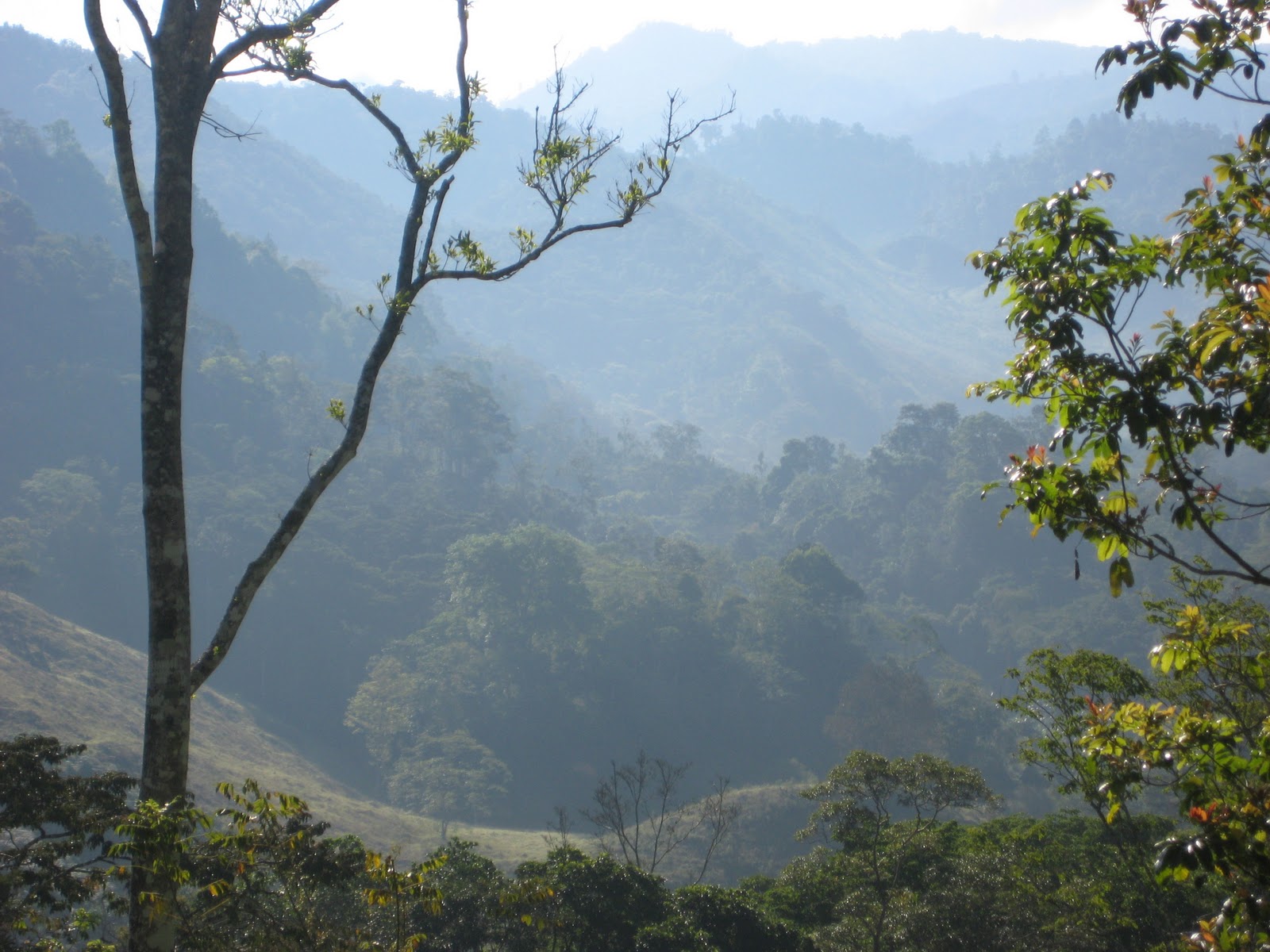
It is about a 4 mile out and back journey from my house and I haven't been taking it near enough.  Last Saturday, as soon as we gathered strength to get out of bed, we decided to take a hike starting with the Matador path.  I figured this was a perfect opportunity to take a couple pictures of my running path.  As you can see from the first picture, the path opens up to the city like a river opens to a delta but instead of sediment being deposited onto the delta, trash from the city is deposited before farmers go to work on the fields.  There is a serious lack of waste management in the city.  Trash is discarded wherever it is created instead of being thrown in a trash can ten feet away.  In the United States, we have a problem with overcrowded and overfilled landfills, but at least we can get the trash there.  Sometimes it seems like San Fancisco de la Paz IS one giant landfill.  The problem is that there is no infrastructure or incentive to put trash in the appropriate place.  I witness students finish a can of juice, a sucker, or a plate of tacos and drop it right on the ground as soon as they finish.  The sad part is that the trash can is right in front of them.  I started a recycling project because I want the kids to know that not only is there an aesthetic value to appropriate trash removal, there is also money in it.  I told them that I would double any money we make off of recycling and have a big party.  Unfortunately, it hasn't been going as well as I thought it would.  The younger students just don't understand how to recycle or why we are doing it.  I don't want to discourage them when they put trash in the wrong bin because the fact that they are putting trash in a trash can is a miracle in itself.  The burden to separate the trash falls mostly on the janitor and thar is unacceptable.
Someone needs to get a hold of a garbage truck and earn a contract with the city for trash removal.  No one would pay out of pocket to have their trash removed when they could either burn it or throw it on their neighbors lawn for free.  Unfortunately, the city doesn't have any resources because every single business transaction is done in cash with no paper trail--no taxes are paid.  I think this system is great in every aspect except for trash removal and paving the city streets.  Both of these services are non-existent right now.  Someone would have to convince the entire city that trash doesn't belong on the street and that they need to pay to have it removed.  Good luck with that...

A 5 hour hike scaling the rounded peaks of Olancho gets easier and easier each time we do it.  Though I always make a fatal mistake in the beginning.  No matter how hard I try, I always seem to get my feet wet crossing the first or second river.  It may be lack of concentration or maybe I need to warm up a bit, but usually during the first hour you can hear SPLASH as I lose my balance and my boot plunges ankle high into the river.  With soggy shoes I trudge through the brush looking for a beautiful view.  In this country, more often than not, you can find all the beauty you seek.  This past weekend that beauty came with a price.  A dry riverbed wound up a nearby mountain so steep that it could almost be classified as a waterfall.  We decided to scale it to reach the top of a mountain whose summit was obscured by the trees canopied over our head.  The dry river bed ended 3/4ths of the way up the mountain when we were already committed to reaching the top.  The top was guarded by bushes with thorns just as painful as a cactus spine.  Even still, we couldn't turn back.  We reached the top of the mountain and were rewarded with a beautiful view of the other peaks and the river that we had just followed.  Having already hiked for three hours, the clearing at the top of the mountain was a welcome rest.  I almost fell asleep with the breeze hitting my face, but I was too preoccupied by the impending three hour journey back.  Blood dripped down my arms from the cactus like pricks as we descended down the mountain often slipping completely off our feet tumbling ten feet until we found a route or tree to hang on to.  Every time someone took a big spill the mountain air was filled with an array of expletives and the laughter of the few who hadn't fallen.  We reached the riverbed in under an hour and cleaned our wounds off.  As always, the journey back is pretty quiet, as each of us silently wonders why we decided to walk so far in the first place.  When I reached the trash delta I decided that something had to be done about it.  When I got home I found a stick and a nail and made a trash stick.  My new project is to beautify the entrance to El Matador.

Quote of the Day: "Peculiar travel sessions are dancing lessons from God."
                                                                      Kurt Vonnegut (again)
In other words, don't lose your spontaneity.

Student Profile: No words this time, just a picture.  Bunch of trouble makers, but I love 'em.

Sunday, March 13, 2011

Rainbows, Lizards, and Progress

Yesterday, a storm swept through the valley with torrential winds carrying dust from the unpaved streets.  I had just closed my eyes for a nap when, WHOOSH, the wind ripped through my curtains like a parachute, completely tearing them from the wall.  The rain hadn't arrived yet but you could see it painting the mountain side in the distance.  I began fixing my curtain but stopped to take a long look at a vibrant rainbow arching above the mountain-scape.  Given the spirit of the season, "Where's me pot of gold?"  


A pila is a large tub of water usually found in the back yard or on the roof of houses in Central America.  Water supply in the city is unpredictable, so when there is water, the residents of the city fill their pilas for a water reserve when the supply is dry.  Outside of the city, when the pila isn't disturbed for a while, you may be able to find an iguana or two inside.  Mario brought 3 back from a farm just outside the city.  I was under the impression that these lizards would be friendly, but as it turned out they acted more like miniature dragons hissing and attacking when approached.  I thought Mario might have plans to keep them as pets until he unsheathed his machete and prepped the reptile for the kill.  "What are you going?", I asked.  "Iguanas son muy rica!", he responded. (Iguanas are tasty!).  Mario and his cousin lit a fire and were able to sear the skin in order to pick the meat off the iguanas.  When dissecting the reptiles we found that two of them were pregnant.  Mario's eyes lit up--Iguana egg soup! 


A group of Americans from the University of New Hampshire is in the city to volunteer for a week building a vegetable garden at our school.  It is a Catholic student organization who each year finds a volunteer project in Honduras.  They invited us to go to another set of caves about an hour south of the caves we visited last weekend.  Contrary to last weeks adventure, this set of caves is heavily commercialized with well lit passages and a concrete path throughout.  A Peace Corps volunteer and some locals discovered the cave a while back while taking a hike.  After much exploration, they discovered a room with about 20 bodies.  These bodies, if I remember correctly, are the oldest bodies ever found in Central America and date back almost 3,000 years.  The bodies were dated around 900 BC, which is actually pre-Mayan.  The cave dripped minerals that preserved the bones with a crystalline glitter and in the dim light of a flashlight, the men thought they were glowing.  The cave is often called, "The Cave of the Glowing Skulls."  Sounds like something out of an Indiana Jones movie.  The remains are to this day being excavated and studied along with a wealth of artifacts.  As is the case in a number of early civilizations, the caves signify the underworld and were used for ritualistic burial sites.  We are planning another expedition to the caves we visited last weekend on private property.  Our fantasy is that there has to be something in those caves worth finding that was not previously discovered.  We are all greedy for Mayan treasure.  
The volunteers from New Hampshire came to the school Friday to take a look at where they would be working.  We got a big game of soccer going and they got a chance to interact with the students.  They began asking the students questions in English and my students performed brilliantly.  Luckily, they asked questions to some of my brightest students.  In perfect English, they answered questions like, "What is your name?, What city and department do you live in?, How many brothers and sisters do you have?, What do you like to do?, How old are you?.  I have to say, I was glowing with pride from our progress.


Below are a couple photos of our heavily fortified house...


Quote of the Day:  "Americans are forever searching for love in forms it never takes, in places it can never be.  It must have something to do with the vanished frontier."
                                                                               Kurt Vonnegut--Cat's Cradle

Thursday, March 10, 2011

Got Leche?

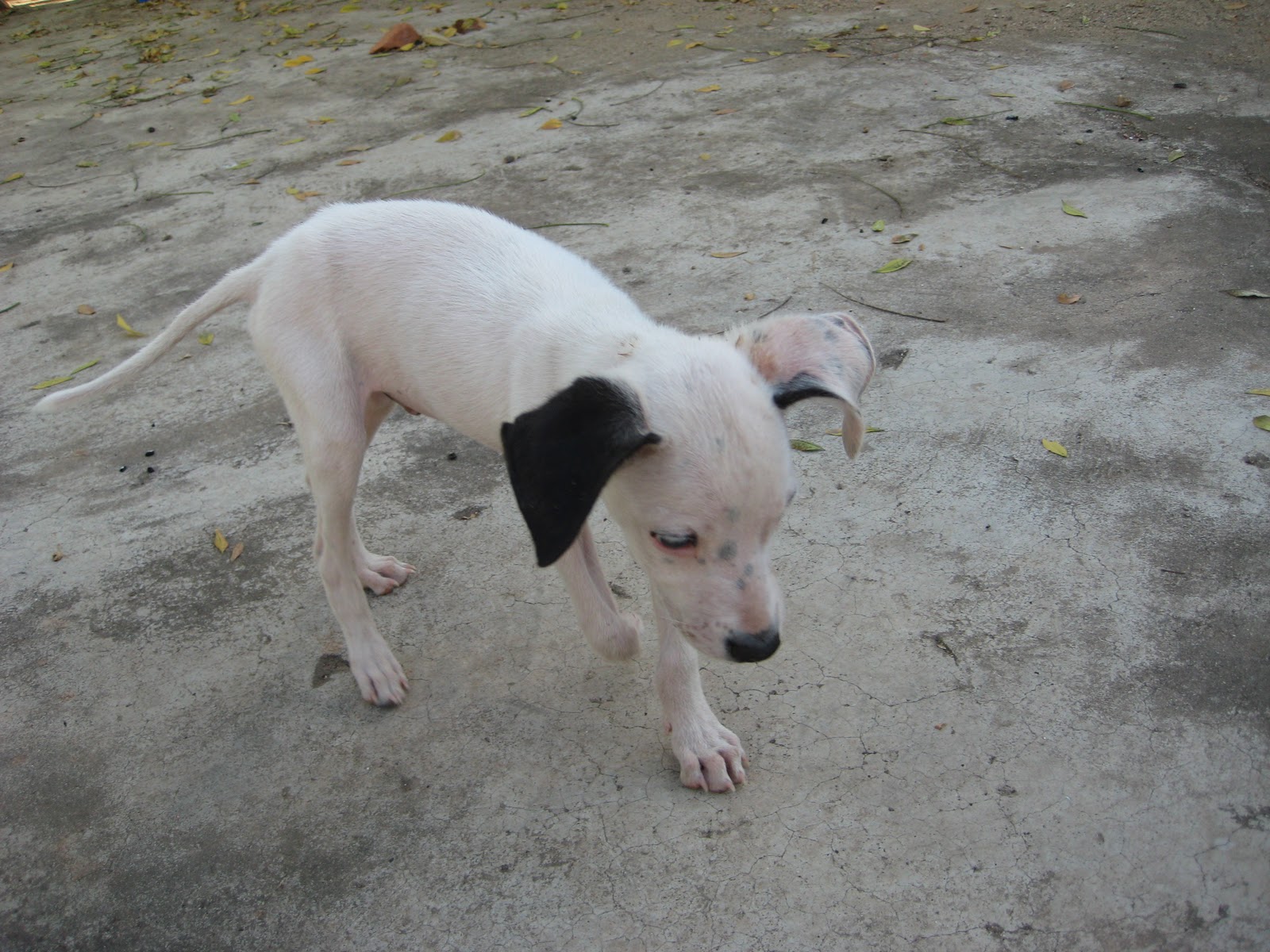
Each day Leche is getting stronger and stronger and eating more food.  He can now bark, run, and play like any other dog.  We share a house with Dona Nila and Don Mingo.  Don Mingo used to be the governor of Olancho when Mel Zelaya was in power.  They are both intimidating with their social stature as well as their religious convictions.  They hardly spend any time at this house because they have so many other properties and businesses to look after.  We were extremely nervous to show Leche to them, because they had no idea we had rescued a dog.  Finally we got the courage to bring him over.  We had Leche behind our backs and we told Dona Nila we had a confession to make.  We showed her the dog timidly not knowing what her reaction would be.  She loved him.  She asked if we had all the food and medicine we needed and told us we should have a bed made for him. WHEW.

When we got Leche, you could see his entire skeleton protruding from his frame and now he has a little belly full of food and loves to attack your feet when you are wearing socks.  Last night before he went to bed, it was as if he just figured out that he could bark. A light bulb went off in his mind and he started barking and howling, really proud of his new talent.  After a while, he realized that it was exhausting to bark so much and he curled up in a ball on his makeshift bed and fell asleep.

After a long day of running around and yelling at the kids, Leche is definitely fun to come home to.  Having Leche is great because he doesn't have bad days.  He is always the same happy puppy that he was the day before.


STUDENT PROFILES


Julia causes a lot of problems in class.  That being said, she is also one of my favorite students.  She is always adorable and even when she makes me mad, it is hard not to smile at her.  She has a mischievous smile that always gets her out of trouble.  Both her mom and dad are working in the United States, so i haven't gotten the chance to meet any of her family.  She is the type of student that likes to be in control.  She likes to dictate the classroom dynamic.  If she doesn't get her way she causes problems.  So I always assign tasked that don't really matter too much to her so she can take the lead.  Like today I said, "Julia, can you please pass these papers out to everyone."  She responded, "Yes, I will, but not until everyone is sitting down and being quiet.  She will probably make a great teacher someday.  Or a great dictator...

Tuesday, March 8, 2011

Ciruela and Tamarindo

Ciruela and Tamarindo are exotic fruits that I had never tried before.  I have been eating them a lot here, as they are popular mid-afternoon snacks.

This is a Tamarindo pod.  The Tamarino plant originated in Africa, specifically Sudan where it grows wild and in plenty.  North Africa, the Middle East, and India eventually started cultivating the tree and apparently Tamarindo is found as an ingredient in a lot of popular Chinese, Indian, and Middle Eastern dishes.  In Western cooking, it is found in Worcestershire sauce among other sauces and drinks.  If you were to take a seed out of the pod and suck on it, it would be very sour and acidic like a lemon.  It is very pulpy with plenty of fiber and, believe it or not, it is high in calcium.  Medicinally, it is consumed as a natural laxative.   It was introduced heavily to Mexico and the rest of Latin America when the Spanish and Portuguese colonized the continent.

Abuelito told me a story about the Tamarindo fruit when we were discussing the Honduran economy.  While talking about the economy, we were enjoying a glass of Tamarindo juice.  I told him it was probably my favorite new thing I have tried since I have been here.  He told me a story that reminded me of Chinese folklore or something Confucius would write to teach someone a valuable life lesson.  He said a man came to him a couple years back and asked him for money because he was poor.  Abuelito asked him why he was poor.  He said he couldn't find work because there were no jobs around.  Abuelito knew the man's family from around town.  He said, "Doesn't your family own a good amount of uncultivated land outside the city?"  The man confirmed that he owned about 100 manzanas (1 Manzana=1.7 acres) of land just outside of town.  Abuelito explained to the man that he had more land than most of the rich people in the city.  Abuelito suggested that he cultivate Tamarindo trees and sell them locally as well as export them out of the country.  He told the man that in seven years he would literally be a millionaire.  The man said, "But you aren't listening, I am poor right now!

Abuelito said that is the kind of attitude Hondurans have.  They have absolutely no foresight in business.  They have absolutely no concept of working hard now so that you can benefit later.  Abuelito began a long rant against his own race and ended by saying, "this is why I am glad you are here, maybe you can talk some sense into our country."  Talk sense?  All I could think about was buying land and being a millionaire in 7 years.
This is the Ciruela.  It is a vibrantly green fruit that comes from a tree about the same size as the Tamarindo.  Hondurans sell Ciruela in clear plastic bags sprinkled generously with salt.  It took me a great deal of time to look this fruit up on the internet because it has a weird pronunciation--it is pronounced Sid-well-uh.  I asked a couple people how to spell it and they all gave me definitive answers, none of which were correct, until I asked another teacher at the school.  She helped me look it up.  Upon looking it up, I found that Ciruela means plum in Spanish.  It is either one of two things--they either pick the fruit and eat it early, or it is an entirely different species of plum.  Its taste is sour and acidic, hence the salt.  We have a Ciruela tree that is just about to sprout in our backyard and I cant wait for the harvest.  The fruit has very little calories and is actually entertaining to eat because of the pit inside.  I always try to drop-kick the pit as far as I can.  Ciruela seems to be a favorite snack among Hondurans.

C.S. Hundred Dollar Challenge--With 100 U.S. Dollars, you could buy 4,534 delicious Ciruelas.

Quote of the Day: "Productivity is never an accident.  It is always the result of a commitment to excellence, intelligent planning, and focused effort."

Sunday, March 6, 2011

Las Cuevas

There is nothing more primal than a man in a cave.

My day started with the piercing beep of my watch alarm.  I pressed the button to illuminate the digital screen—it said 5:30.  After several attempts to ignore its call, I finally awoke from a stupor to see Mario chipper and ready to catch the bus to Gualaco.  He and his crew of cousins, half brothers, and half sisters met us on the walk over; all of them fighting the morning cold of 65 degrees with sweaters and hoods scrunched around their face.  We made sure we were at the bus stop five minutes before the supposed arrival time while we knew well that the bus was going to be late. 

The bus arrived about 20 minutes late and we were on our way.  The morning mist still blanketed the surrounding mountains as we slowly wound our way through the valley.  Five minutes outside the city, the road changed from delightfully paved to ridiculously unpaved.  The old American school bus rocked side to side, up to down as we all tried to capture any glimpse of sleep that we could.  We started gaining altitude through the hills and the road became reminiscent of one of the “most dangerous highway” shows that you might see on the Discovery Channel.  While we climbed, pick up trucks passed on the left during blind turns, completely ignoring any resemblance of traffic law. 

I distracted my fears by looking at the scenery.  The sun had just peaked far enough over the mountains to bring light to the valley, the light brought warmth, and the warmth brought more conversation to the group.  We marveled at the mountains, the morning mist, and the array of cattle and horses that climb the steep hills to get to fresh grass.  Every once in a while we saw a patch of scorched earth that looks completely foreign to the lush, green and almost jungle-like environment.  I knew from my time in Guatemala, where I had a class in environmental education in Central America, that this was the tell tale sign of the slash and burn technique.  Practiced all around the world, although typically in the Third World at this time, slash and burn involves cutting down trees in the desired area and subsequently setting them on fire.  It is an easy solution to the fact that the farmers cannot cultivate land where a forest or jungle exists.  The soil created by the slash and burn technique typically yields good harvests for the first and maybe the second harvest, but the land is eventually rendered useless.  As population increases in the Third World and as demand increases for food, more and more people resort to the slash and burn technique as a quick fix to their poverty, with little regard to the sustainability of the practice.  This is an environmental and cultural disaster.  Any area not designated by the government as a protected area is a potential area for bad agricultural practices.  This is destructive to the environment, especially as we begin to realize the impact on a global scale.  Solutions are few and far between, but as always, the solution involves education. 

The area in which we traveled is for the most part uninhabited.  Residents of Gualaco or San Francisco seem to own the land and use it to raise cattle, grow coffee, or God knows what.  Mario explained that the area, not too long ago, was completely covered in water, which destroyed the local economy.  In 1998 Hurricane Mitch swept through Central America with a vengeance, with a reported death toll of around 8,000 people.  What was even more devastating than the loss of life was the economic implication.  In an already developing economy which subsists on their commodities, the Hurricane took them back to square one.  Foreign aid flooded Honduras as most of the country opened their palms looking for help.  As is the case whenever the Third World sees a natural disaster, corruption played an important role in attempted recovery.  Money entered the country earmarked for recuperation from the Hurricane and ended up in the pockets of those that were charged with the responsibility to care for their citizens.  It has been an uphill battle for the citizens of that valley, but after that kind of devastation it can only get better. 

We got off the bus a couple kilometers before Gualaco to begin the rest of our journey on foot.  When you ask directions or ask how far something is in Latin America, I think the standard answer is “Oh, it’s not too far, maybe about a 30 minute walk.”  I grabbed a can of Sprite at the local store thinking that a thirty minute walk would only require mild refreshments.  What I didn’t know, was that I had drilled the nails into my own coffin. 

The walk was as beautiful as it was strenuous.  We climbed what seemed to be 80 degree inclines only to be dropped back down the mountain just so we could go back up again.  This cycle went on for almost two hours as we worked up a good sweat and marveled at our surroundings.  Trying to cross a river, I slipped on a rock and planted both of my feet in 8 inches of water.  I couldn’t believe I could be so clumsy.  Had I known then what I was about to get myself into, I would have had a different attitude. 

We arrived at the house of one of Mario’s family members.  The clay house sat on a small hill in the valley overlooking the same beautiful scenery that we enjoyed on our way.  After about 4 hours of traveling and 4 miles of walking, I needed to take my morning dump.  I asked Mario where the bathroom was and he pointed to a small outhouse constructed with about 6 planks of wood, a concrete base, and a porcelain toilet without a seat.  I made a mess in there—an absolute mess.  I took water from the horse’s trough and did my best to get the toilet flushed and the porcelain clean before we left for the caves. 

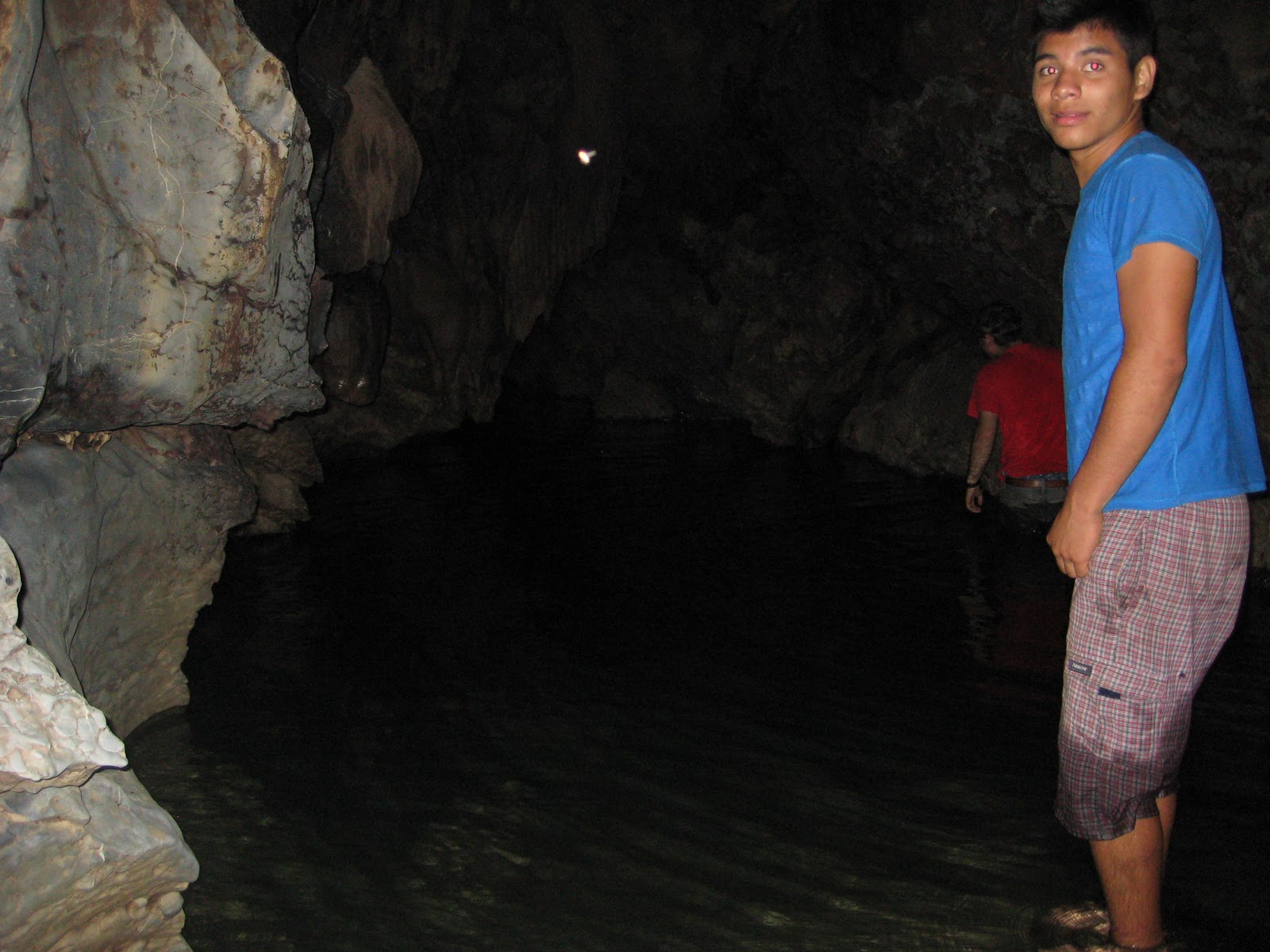
When Mario’s cousin invited us to go to the caves, I thought they might be a small opening in the Earth that you could poke your head into.  I was wrong.  We followed the river to where it originated and pushed through the brush to find a small opening leading into what seemed to be a small cave.  I made the decision, since I was already wet, to leave my jeans and hiking boots on and to just plunge them into the fast moving underground river.  I got out my only source for light—a cell phone with a built in LED flashlight.  We continued to follow the underground river through the cave and came to what appeared to be the end.  Just as we thought about turning around, we spotted an opening formed in the shape of a cylinder that we would have to do our best to climb through to continue our adventure.  Rob climbed through first since he had spent a good portion of his college years at a climbing gym.  Mario and I went next, and the girls decided to back out. 

As soon as we collected ourselves from the climb, we were able to focus our light on the surroundings.  That small space we came through gave way to a massive room of rock formations and the continuation of the underground river.  The river rushed beneath our feet as we were suspended by large boulders, hopping from one to the other to make our way further into the cave.  The boulders leveled into gravel and the gravel dropped off to a steaming pool of water.  The temperate had dropped significantly in the cave and the water was just a little bit warmer allowing a hint of steam to emerge from the surface.  Again, we thought about turning back, but the adrenaline of continuing was too strong.  Before taking off my shirt and leaving my backpack on a nearby boulder, I was able to snap a few pictures before I plunged into the water.  The water was so deep that none of us could touch, and we grabbed the rock formations for support as we continued.  And so it was for a half hour or so, one football field into the cave led to two and two to three.  We made our way from deep pools to dry rooms, until finally we met our match.

Our last pool led us to a small opening in the rock.  We treaded water just thinking about whether we wanted to see what was on the other side.  We decided we had come too far not to see.  We swam carefully through the small opening in the rock to find another large dry room.  We all stood up, proud that we had taken another huge step.  We were extremely quiet as our lights were individually spanning the large room.  Then, just as I was about to break the silence with some useless banter, Mario whispered with wide eyes like a small child, “Mira, Arriba” or “Look, up”.  The ceiling appeared to be moving with thousands of bats.  We disturbed them from an afternoon nap and they began to fly around us squealing in their shrill tones.  The bats began flying out of the opening that we had only just squeezed through.  I squeezed through the opening and got to dry land as soon as I could to grab my backpack and make the journey to find the sunlight. 

The most technical part of the adventure was the climb to get out.  It was still very dark in the cave and I was climbing with my bag strapped to my back as well as my cell phone flashlight in my mouth.  Just as I lifted myself into the sunlight, I lost my foothold and slipped slightly losing the flashlight from my mouth.  I heard it clink several times on the way down and I wrote it off as a loss.  Mario wasn’t satisfied with ruining such a fun cave adventure and he decided to go back in.  After about 15 minutes of intense climbing and a couple bruises and gashes he emerged victorious from the cave with my cell phone in 3 pieces.  I put the battery back in and it turned on just as good as it did before it took the plunge. 

The four cave adventurers emerged from the mouth of the cave victorious, each of us with his own battle scars.  I hit my head on a rock formation as we were walking and I have a pretty disgusting gash to show for it.  As Mario was diligently searching for my cell phone he slipped on a rock and scraped his back leaving a trail of blood on his shirt.  Emerging from the cave I realized how good it is to breath fresh, above ground air in the presence of the warming sun.  Walking through the cave, I realized that there is nothing more primal than a man in a cave. 

We returned to the house which was a couple minutes from the caves to cook some lunch that we brought.  I couldn’t help but wonder whether their lifestyle is better than ours.  They cultivate their own coffee, butcher their own meat, and they fetch their own water.  They work the land day after day for vegetables and when they get hungry they have to do the honor of killing their own cattle.  In that moment, that was the lifestyle I admired.

After lunch we were exhausted, battered and bruised.  We were all at each other’s throats and the walk home for the most part was lonely.  I had run out of my can of Sprite a long time back and we were taking the 4 mile trek back at the worst possible time—noon.  The sun beat down on us as we climbed large hills only to be dropped off on the other side.  I don’t think I have ever been as thirsty as I was on the way back.  Though there was one experience I could draw on.  The one thing I learned from the marathon was that I should have run it faster.  If I was on the course less time, maybe I would be less tired.  So, I tried to walk as fast as I could just to finish quicker.  When I finished the walk I busted through the doors of the local store, ripped open the refrigerator and chugged two Gatorades, an apple juice, and a sprite.  I never tasted anything as sweet as the cool, refreshing bite of a Gatorade.  I made it—a caveman back to the comforts of modern civilization.